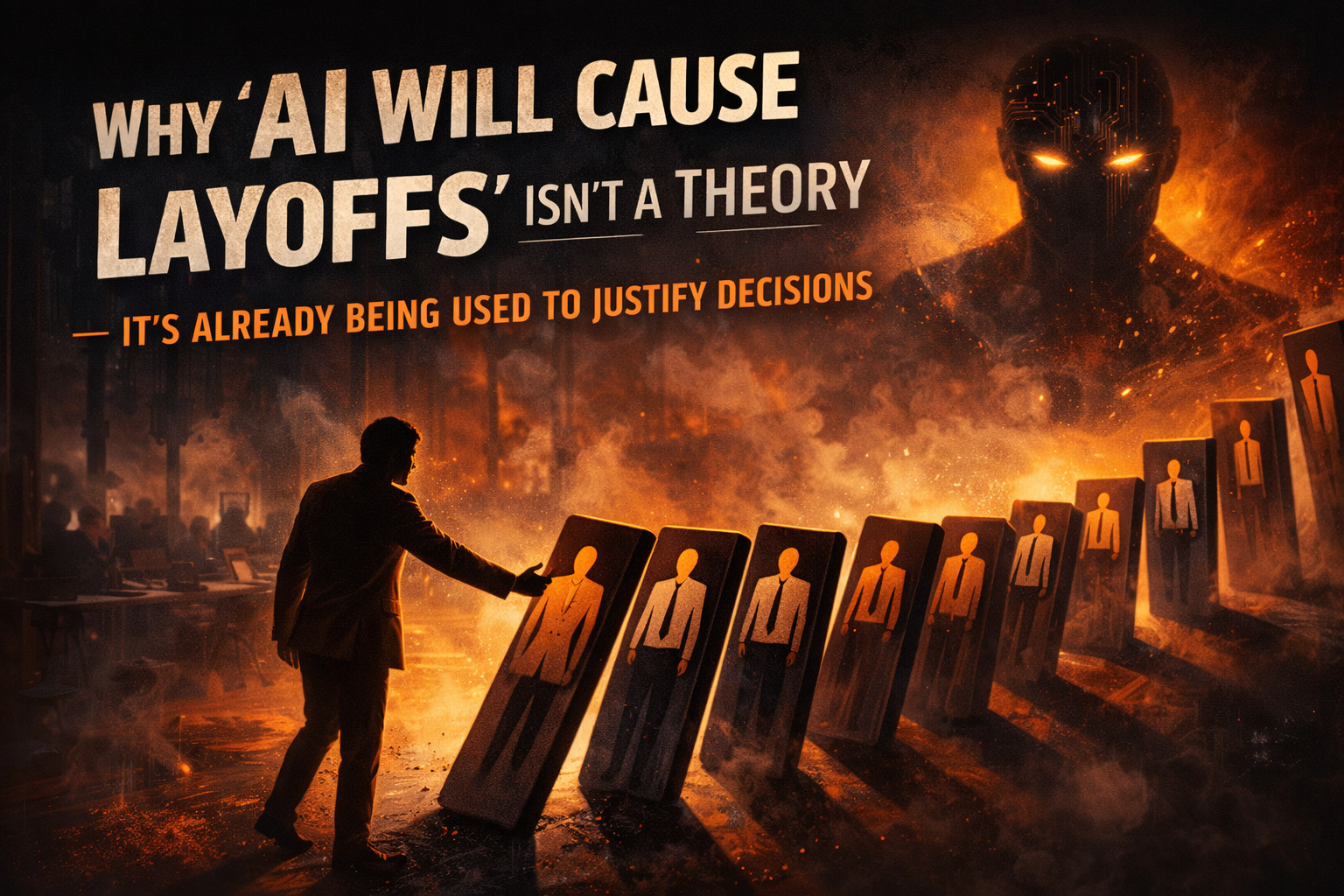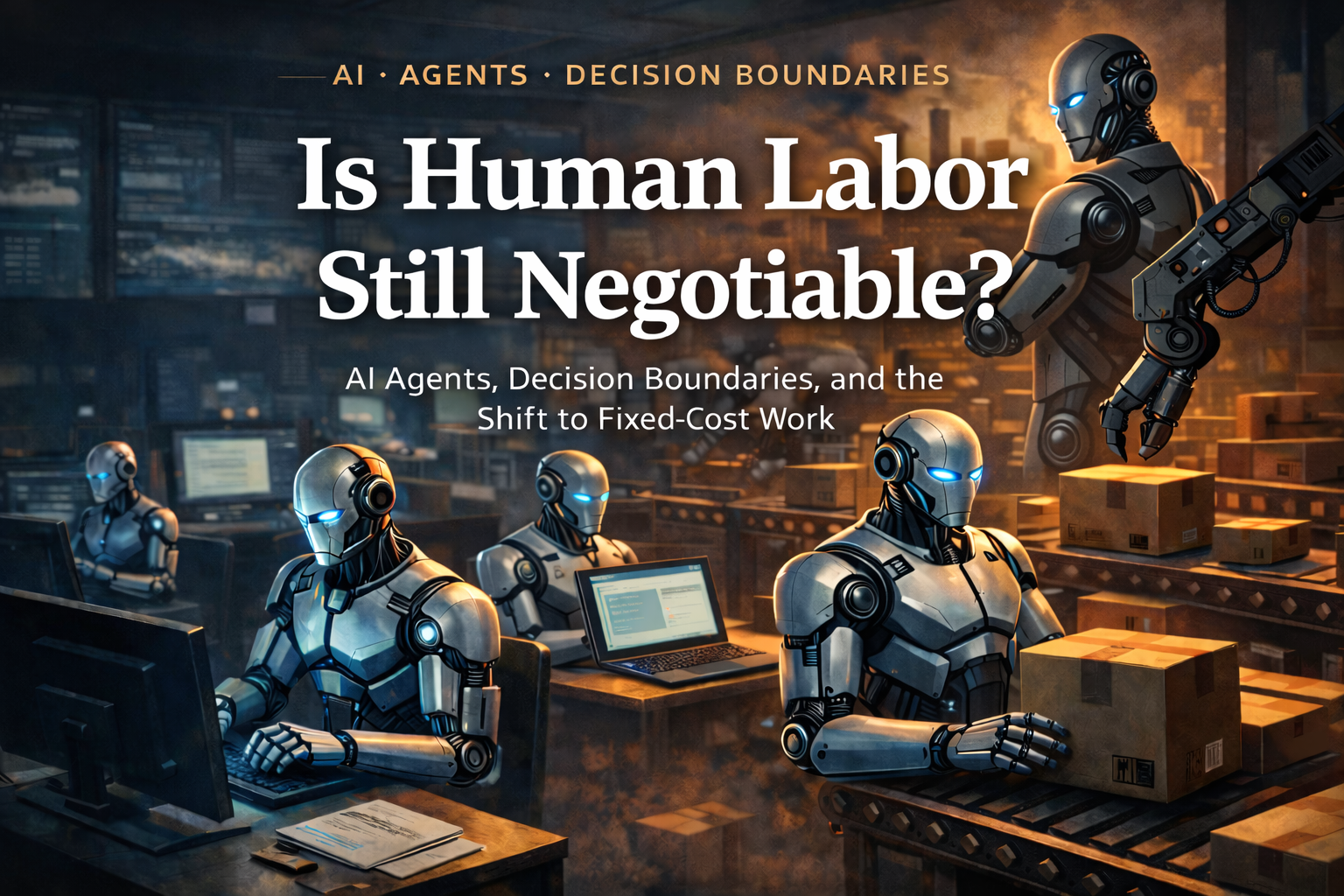
Is AI Job Loss Real — Or Is the Tech Industry Losing Sight of What Humans Actually Do?
Is AI Job Loss Real — Or Is the Tech Industry Losing Sight of What Humans Actually Do?
“AI isn’t taking away jobs — it’s taking away the reasons companies valued us.”
— a recurring sentiment from developers in public forums.
For many developers and engineers, conversations about AI and job loss do not start with models or benchmarks. They start with identity and relevance. It is not a fear of technology that keeps people up at night. It is the fear that the work they trained for, sweat for, and built careers around may no longer be recognized as valuable in the systems companies are adopting.
AI tools are powerful. Chat models generate code, agents can execute workflows, and automation frameworks promise efficiency. None of that is new. What is new is something far less mechanical: the underlying incentive structures in businesses using AI tools without clear authority models.
Why “AI Will Kill Jobs” Is Too Simple
When developers talk about AI “taking jobs,” they rarely mean AI will suddenly become omniscient. Instead, the real, honest concern is this:
“If one person + AI output can do the work of ten, why would companies keep the other nine?”
This is not capability anxiety. It is governance anxiety. Most AI deployments optimize for output volume and cost efficiency. But they do not define where human judgment, accountability, and authority matter. That is a structural problem, and it shows up in real worker sentiment.
Worker Voices: The Pain Behind the Statistics
Across threads on Reddit and developer communities, you see this pattern emerge:
- “AI can write code, but I now spend more time fixing it than writing original logic.”
- “My job shifted from building to babysitting AI output.”
- “Layoffs aren’t happening because AI is perfect — they’re happening because AI is a convenient excuse.”
These are not isolated complaints. They reflect a shared experience of people who know their craft and are watching how automation decisions are being made without structural accountability.
The Real Shift: From Task Execution to Decision Ownership
Let us be blunt:
AI agents and tools do not worry us because they generate output.
We worry because systems are replacing judgment with unchecked automation.
Companies are not laying off staff just because tools exist. They are doing it because the systems they build, and the decisions those systems facilitate, do not distinguish between signal and authority.
In traditional systems:
- humans provide judgment
- context matters
- decisions are accountable
In many AI-augmented systems today:
- tools provide output
- context is assumed
- no one takes responsibility
That is not automation. That is a decision vacuum.
Why This Matters More for Real Work
AI can generate API calls.
AI can suggest UI code.
AI can summarize text.
None of those things, by themselves, require human replacement. But when companies:
- reward volume over judgment
- evaluate performance based on output alone
- treat models as silent authority
- reduce staff because “AI will handle it”
…they are implicitly saying: human decisions no longer matter as much as human execution.
And for developers, that is where the real fear lives.
What Developers Really Want — And What AI Alone Can’t Give
A professional developer does not want to be replaced.
They want:
- to solve difficult problems
- to create systems with context
- to provide judgment humans trust
- to own decisions, not just push buttons
No matter how smart a model gets, these things remain non-trivial — precisely because they involve authority, accountability, and context.
That is why our conversations need to move beyond:
“AI will take jobs”
…to focus on:
Where do humans still provide the value that systems cannot?
Closing: The Ownership Layer Matters More Than Output
So yes — AI affects employment.
But not because machines suddenly know everything.
AI affects employment because decision ownership — the thing that makes human work meaningful — is not designed into most AI systems.
If we do not define where AI stops and humans decide, developers will not lose their jobs because tools are smart. They will lose them because systems were never designed to value human authority in the first place.
Call to Action
If you are a developer feeling this tension — between AI output and meaningful work — you are not alone. There is a discipline emerging to help define where humans matter: the Decision Boundary Framework (DBF).
If you want to go deeper on this topic and build systems — not just code — that are resilient, accountable, and grounded in human judgment, join the early adopter list for AI Under Pressure (launching January 30, 2026) — the course where we teach these ideas from the ground up.
Ready to Build This System?
Join the Early Adopter cohort and get access to live training, direct feedback, and influence on course refinement.
Early Adopter Cohort — Limited Access
Regular Price
$499
Early Adopter Price
$299
Save $200 — 40% off
This is a limited early cohort. Early adopters get access to the course while it is still being refined.
Early adopters get:
- Live, instructor-led training sessions
- Direct feedback on your system
- Influence on course refinement
Once the system stabilizes, live sessions will be recorded and future students will receive on-demand access only.
Early adopters get proximity.
Later students get the library.