Techluminate Academy

Operational Systems · Maternal Care

Sokana Collective

Operational Infrastructure & Workflow Modernization

Designed and implemented operational systems supporting intake workflows, doula coordination, assignment visibility, billing operations, and administrative workflow management.

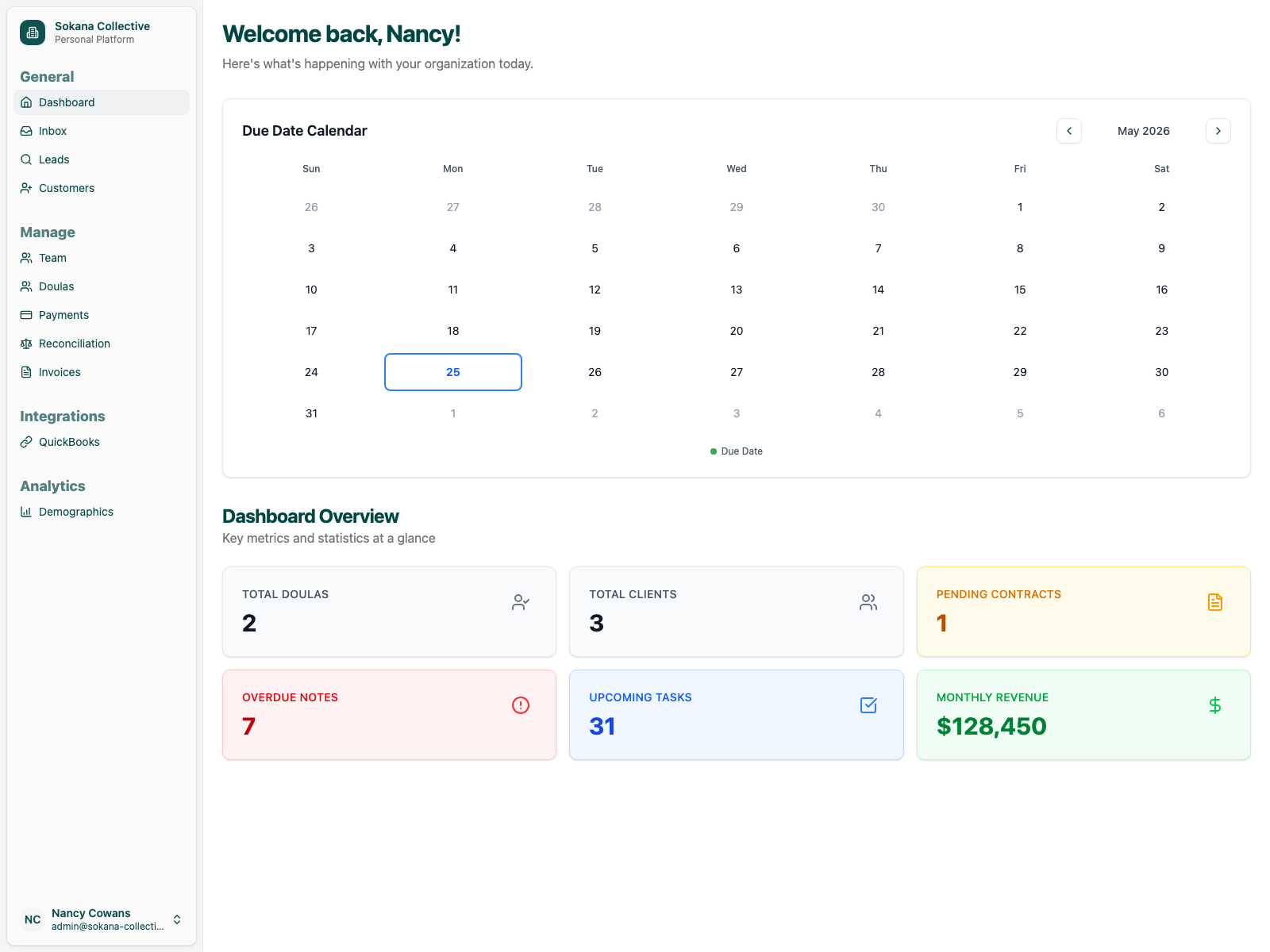
Sokana Collective operational dashboard — client lifecycle and intake visibility

Organization Overview

Sokana Collective is a maternal care organization providing doula support and coordinated services for families navigating pregnancy, birth, and postpartum care.

Behind that mission sits significant operational complexity: multi-role teams, intake from diverse channels, assignment coordination across doulas, and administrative workflows that must stay accurate as volume grows.

The engagement focused on operational infrastructure — not a marketing site — giving staff centralized visibility into clients, assignments, and administrative work so coordination scales with demand.

Multi-role workflows

Intake, coordination, admin, and billing roles operating on shared operational data.

Intake & assignment

Structured intake flows connected to doula pairing and assignment visibility.

Client lifecycle

End-to-end visibility from first contact through service delivery and follow-up.

Administrative visibility

Notes, exports, and operational tooling for staff scaling without fragmentation.

Billing & reconciliation

Workflows aligned with QuickBooks and operational tracking for finance teams.

The operational challenge

Fragmentation was limiting coordination at scale

Before modernization, operational work depended on manual handoffs and inconsistent visibility — creating risk in intake quality, assignment timing, and administrative throughput.

Fragmented workflows

Operational steps lived across spreadsheets, messages, and disconnected tools — making handoffs easy to miss and hard to audit.

Manual coordination overhead

Staff spent disproportionate time chasing status updates instead of coordinating care. Every assignment required manual follow-up.

Intake inconsistency

Client information arrived in varying formats without a single source of truth, creating rework before assignments could begin.

Assignment visibility gaps

Doula pairing, due dates, and hospital context were difficult to see at a glance — increasing risk of scheduling conflicts.

Administrative scaling strain

As volume grew, admin teams lacked centralized tooling for notes, exports, and operational reporting.

Billing complexity

Operational tracking and financial reconciliation required structured data flows, not ad-hoc updates.

Multi-role access requirements

Different teams needed tailored views and permissions without exposing sensitive client data broadly.

Systems implemented

Operational infrastructure in practice

Screenshots are organized by operational capability — intake visibility, assignment coordination, and administrative workflow tooling — not as a feature dump.

Centralized intake and client lifecycle visibility.

Client Lifecycle & Intake Visibility

Operational coordination and role-based assignment management.

Assignment & Doula Coordination

Administrative tooling and workflow efficiency systems.

Administrative Workflow Infrastructure

Operational outcomes

Impact on coordination, visibility, and scale

Centralized operational visibility

Leadership and staff share a single operational picture across intake, assignments, and admin.

Reduced administrative fragmentation

Notes, exports, and client records live in structured systems instead of scattered tools.

Improved assignment coordination

Doula pairing and timeline context are visible where coordination decisions happen.

Structured intake workflows

Consistent intake sections reduce rework and accelerate time-to-assignment.

Improved workflow scalability

Operational patterns support growth without proportional increases in manual overhead.

Reduced manual coordination

Fewer status-chase cycles — teams work from shared visibility instead of side channels.

Better staff visibility

Role-appropriate views give each team what they need without overwhelming the interface.

Improved operational consistency

Standardized workflows create predictable outcomes across coordinators and admin staff.

Technical architecture

High-level systems design

Architecture choices prioritized operational clarity, role-appropriate access, and sustainable workflow evolution — not novelty for its own sake.

React + TypeScript frontend

Composable UI layer optimized for complex operational interfaces and role-based views.

Role-based workflow architecture

Permissions and views aligned to how intake, coordination, admin, and billing teams actually work.

Operational workflow orchestration

Intake, assignment, and admin states coordinated through structured operational data models.

QuickBooks integration workflows

Billing and reconciliation flows connected to operational records — reducing double entry.

Structured data coordination

Client lifecycle fields designed for reporting, exports, and cross-team handoffs.

Workflow visibility systems

Dashboards and detail views that foreground status, context, and next actions.

Strategic perspective

Lessons from operational modernization

Operational visibility is the foundation

Care organizations do not fail from lack of effort — they fail from invisible handoffs. Centralized visibility turns coordination from heroics into systems.

Scaling coordination is a systems problem

As client volume grows, informal coordination breaks first. Assignment visibility, structured intake, and role-based views are how teams scale without burning out.

Fragmentation taxes every role

When intake, coordination, and admin live in different tools, every transition adds latency and error. Unified infrastructure pays back in consistency, not just speed.

Nonprofits need enterprise-grade operations

Mission-driven organizations still run complex operations. Modern infrastructure is not a luxury — it is how teams protect quality of care under growth.

Modernization is strategic, not cosmetic

Replacing spreadsheets with structured workflows changes how organizations make decisions, report outcomes, and invest in staff capacity.

Need operational systems modernization?

I build workflow infrastructure for organizations managing complex operations — intake, coordination, visibility, and administrative scale.

ContactView More Case Studies